
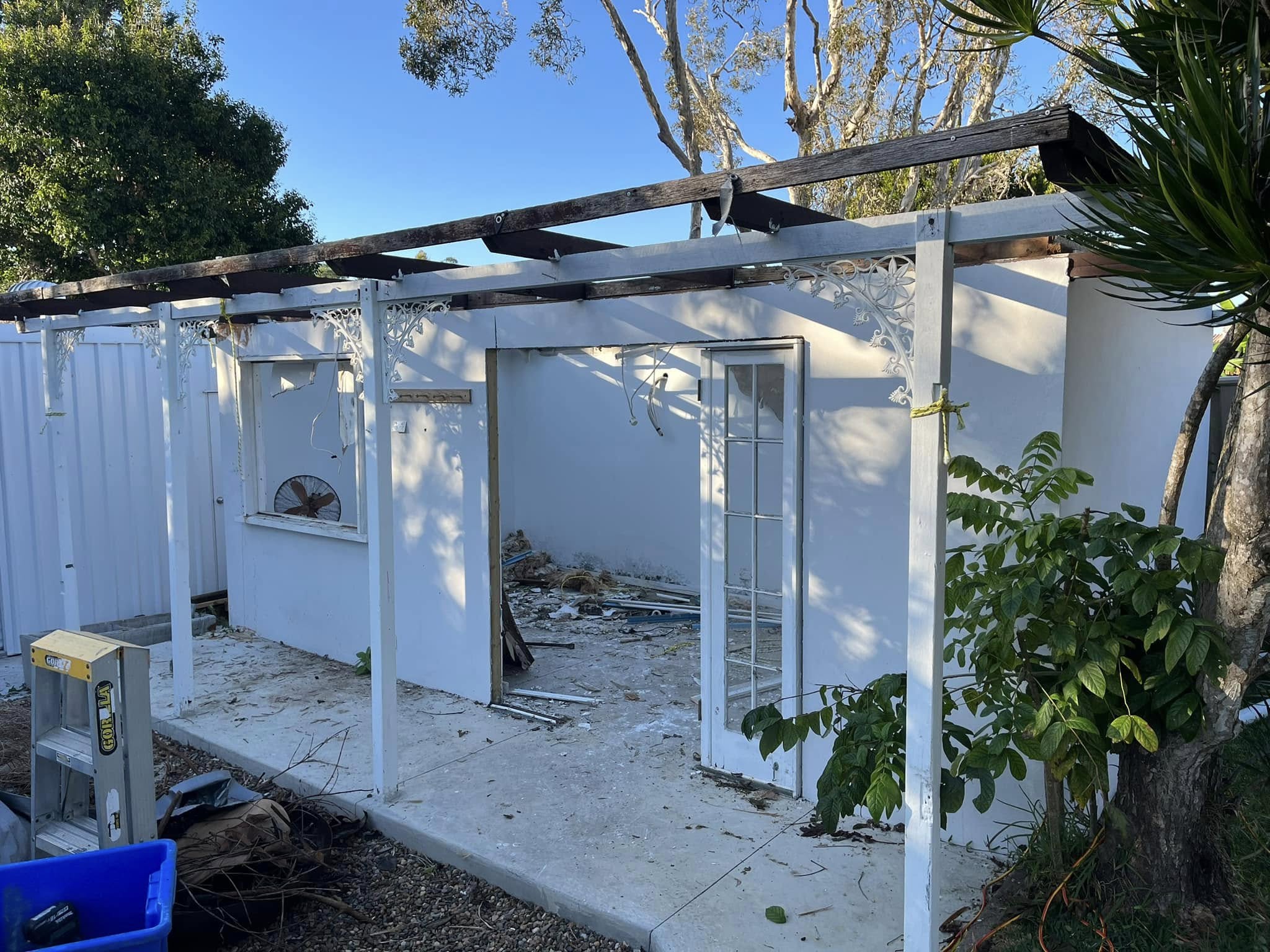
Put the job in the right service lane before the first tool comes out.
The word demolition can describe anything from taking down a garden shed to clearing an entire building. That broad meaning makes it hard for a property owner to know who to call. For Absolute Rubbish Removals, small demolition projects centre on controlled dismantling of selected structures and fixtures, followed by debris removal and a practical site clean-up. The job still needs to be assessed, but a simple scope map can point your enquiry in the right direction.
Lane one: a separate structure has reached its end
A freestanding shed, small garage, carport, pergola or outbuilding may fit this lane. The key question is not whether the structure looks small from the street. Its materials, height, condition, footings, connection points and distance from nearby property all affect the work. A rusted metal shed leaning over a fence presents a different task from a sound timber shed in an open yard.
Send photographs of every side, including the roof, base and any point where the structure meets the house. Mention narrow gates, steep access, garden beds, pools and overhead lines. These details help define whether ARR can handle the work within its small demolition service or whether another type of contractor is needed.
Lane two: one part of an interior is being stripped out
Small demolitions can also happen inside. Old kitchen cabinetry, selected fixed fixtures and concrete laundry troughs are examples listed by ARR. This is not the same as removing loose household items. A cupboard that can be carried away belongs to a different scope from cabinetry fixed to walls, floors, plumbing or electrical points.
If the job is a kitchen renovation, the dedicated kitchen strip-out service is the clearer starting point. Explain what must stay, what has already been disconnected and which trade is arriving next. A marked photo is useful when the room contains similar cabinets but only one section is scheduled to go.

Lane three: the structure is already down
Sometimes the dismantling has finished and the remaining problem is a pile of timber, metal, bricks, glass or mixed building debris. That enquiry is mainly about construction rubbish removal, not demolition. Describe who completed the work, whether sharp pieces are contained and whether the materials are separated. Never mix unknown sheeting or suspected asbestos into an ordinary debris pile.
This distinction matters because a removal crew should not arrive expecting loose material and discover that a structure is still standing. It also works the other way: a demolition quote should not rely on a photograph that hides a second pile behind the building.
The overlap zone around the project
A small structure often becomes the centre of a wider clear-out. A garage may hold broken furniture, boxes and old appliances before its walls can be reached. That loose material can be discussed as household rubbish removal and cleared as an earlier stage rather than treated as part of the building itself.
Outdoor work can expose palm fronds, cut branches, old pots and vegetation that blocked access. Keep clean plant material apart so green waste removal can be assessed as its own stream. Once dismantling begins, timber, metal, masonry and fixtures form the construction waste component. Naming these layers creates a useful project picture without forcing everything into one mixed pile.
Four boundaries that keep a small job well defined
First, identify the exact structure or fixture. Second, state what must remain untouched. Third, show the access and neighbouring features. Fourth, explain the condition you need at the end, such as a cleared area ready for landscaping or space for another contractor. Those boundaries are more helpful than estimating the job as “easy” or “only a few hours”.
Use action words when describing the boundary. “Dismantle the metal shed, retain the slab, remove the shelves and leave the side gate clear” gives four testable outcomes. “Clear the back corner” could mean removing plants, soil, household items or structures that were never discussed. Precise verbs help the owner and crew look at the same job even when they are viewing different photographs. Write any uncertain item as a question rather than silently adding it to the scope. Name it clearly.
Do not assume that small means approval-free. Brisbane City Council advises that building, planning, plumbing or other approval may be required for demolition or removal work. Owners should check their project with the relevant council, building certifier or qualified adviser before scheduling the job.
A five-photo enquiry that answers real questions
Take one wide photo showing the structure in its setting, one of the access route, one of the roof or top edge, one of the base, and one close image of any attachment to another structure. Add rough dimensions, the property type and the preferred end result. Mention signs of rot, cracking or movement without touching unstable areas.
Absolute Rubbish Removals can then discuss whether the project matches its small demolition scope and how the debris will leave the property. Taking on a structure without the right equipment or insurance can cost more in tip fees, hired gear and repair than a licensed team would have charged, so a proper scope is worth getting right first. Call 0416 090 603 or send the project details online. A well-defined enquiry is the quickest way to move from a vague demolition idea to a workable site plan.